

In 2025, Musica Viva Australia celebrates 80 years of sharing exceptional music with audiences across the country. What began in 1945 as Richard Goldner’s ambitious idea for a dedicated chamber ensemble has grown into a national organisation that champions artistry, innovation and education.
Across eight decades, Musica Viva Australia has welcomed extraordinary musicians from around the world, commissioned new works that have shaped Australia’s musical identity, and created programs that nurture young artists and inspire the next generation.
This anniversary is a chance to honour our history, celebrate the people and performances that made it possible, and look ahead to an exciting future. Here are some of the moments that define our story.
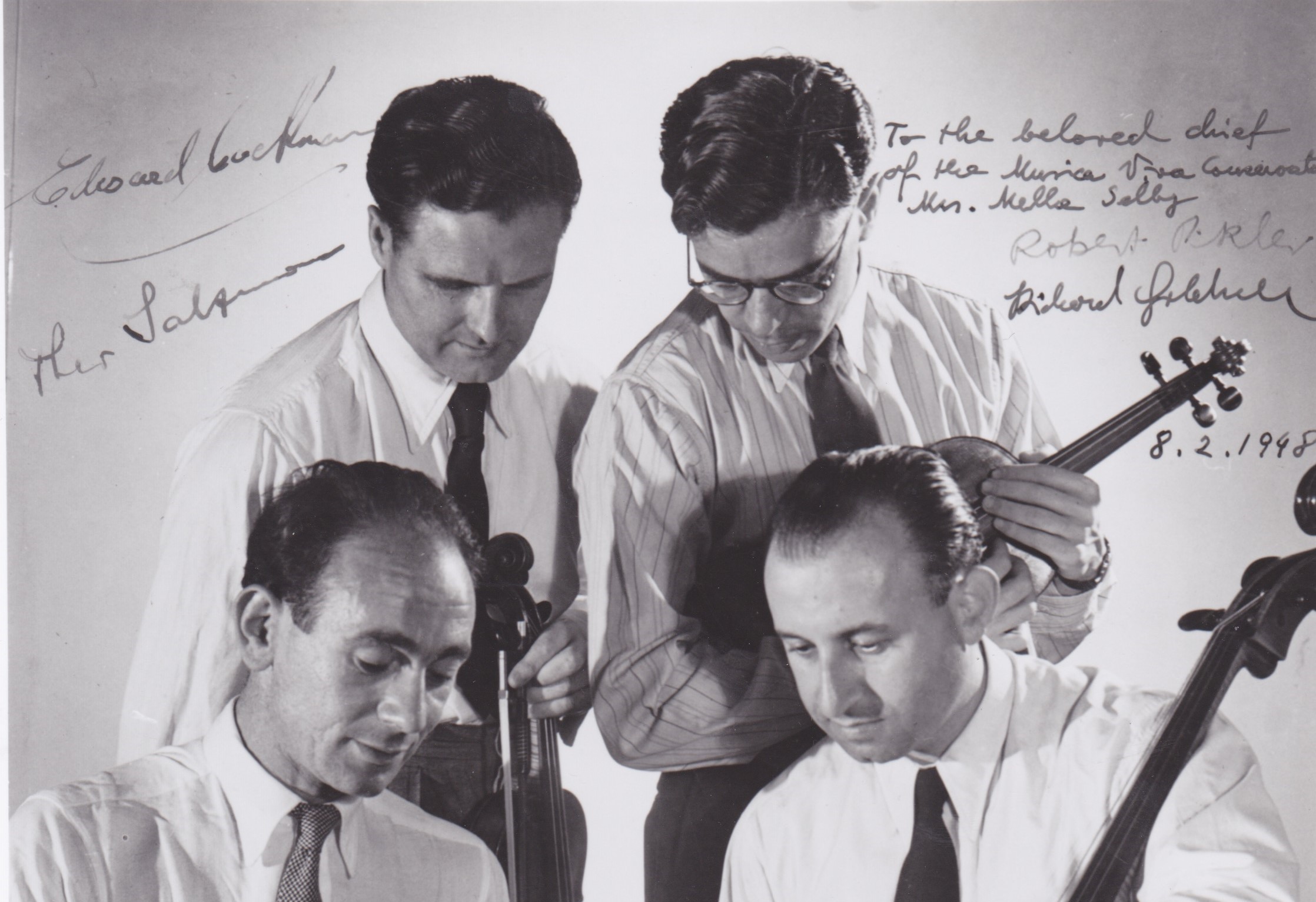
Richard Goldner, Edward Cockman, Robert Pikler and Theo Salzman.
Musica Viva Australia began on 8 December 1945, when inventor and musician Richard Goldner presented the first concert of 'Richard Goldner’s Sydney Musica Viva' at the Sydney Conservatorium of Music. With Beethoven’s mighty Grosse Fugue at its heart, the concert launched Goldner’s vision for a 'repertoire ensemble' dedicated to well-rehearsed chamber music and fearless musical experimentation. Originally built around a single ensemble, Musica Viva quickly became a magnet for artists, audiences, volunteers, and donors eager to cultivate a new, world-class musical landscape in post-war Australia.
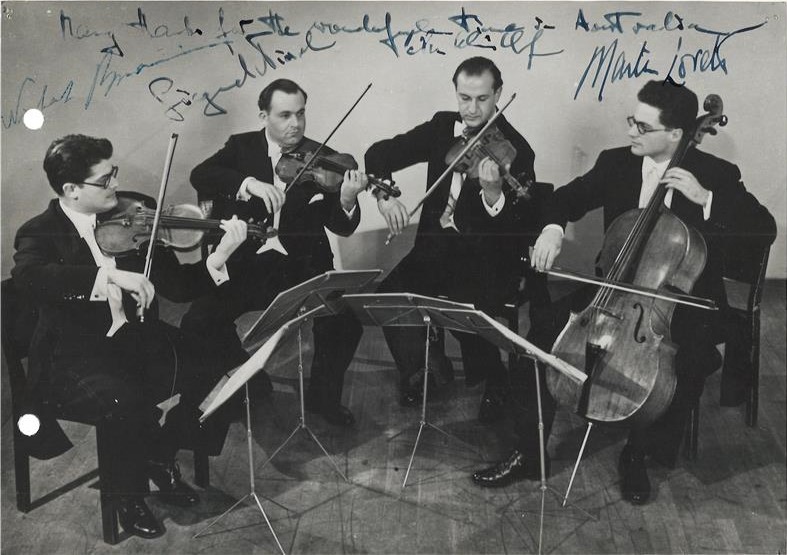
The legendary Amadeus String Quartet.
The 1950s saw Musica Viva expand beyond Sydney and begin presenting international artists to Australian audiences. A landmark moment came in 1955, when the Pascal String Quartet became the first international ensemble to tour Australia under Musica Viva’s auspices. Critics hailed the tour as the most exciting string quartet visit since the Budapest Quartet, and the Pascal Quartet’s performances across Australia, New Zealand, and Indonesia signalled the beginning of Musica Viva’s evolution into one of the Australia’s major chamber-music presenters.
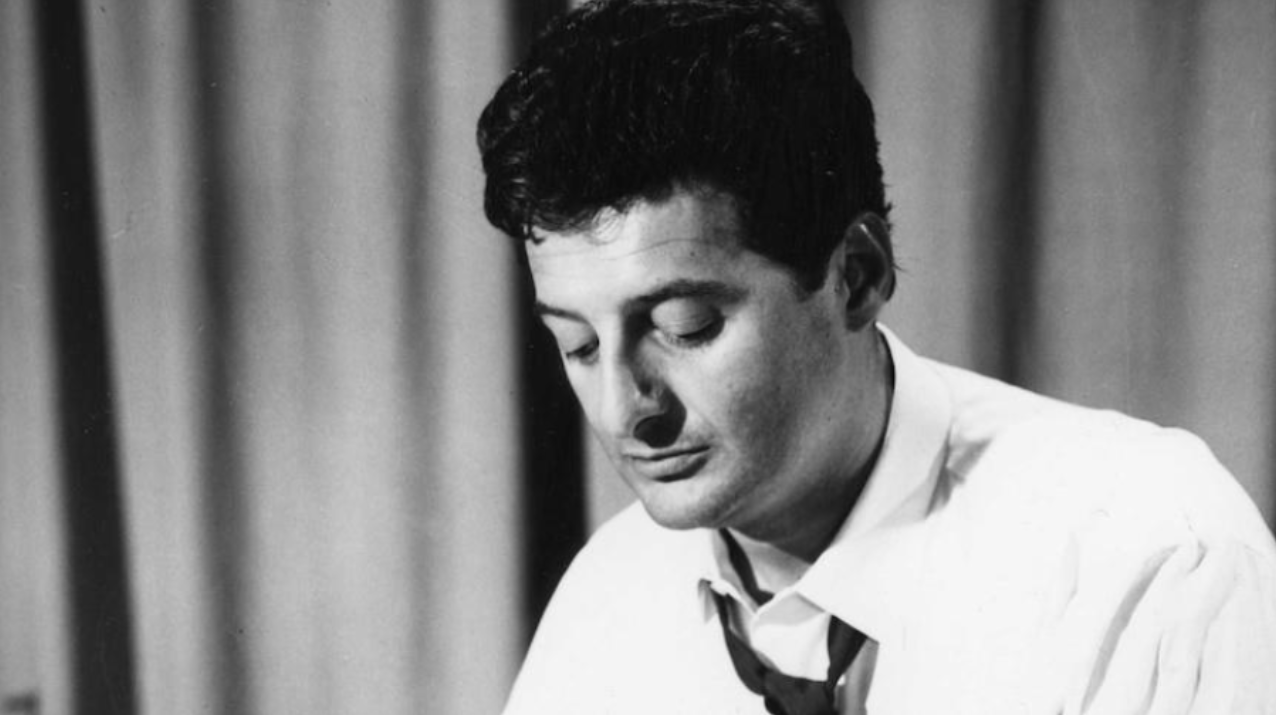
A young Peter Sculthorpe.
In 1965, Musica Viva commissioned its first Australian work: Peter Sculthorpe’s String Quartet No. 6, premiered by the Austral Quartet. This commission marked the beginning of a transformative commitment to new Australian music. Over the decades that followed, the organisation would commission more than 160 new works, helping define a contemporary Australian musical identity.
The organisation celebrated its 30th anniversary in 1975, a decade remembered fondly for bold fashion and bold programming. This was the year the King’s Singers made their first Musica Viva tour, joining a roster of remarkable visiting ensembles. From the Amadeus String Quartet’s traditional concert dress to the Brodsky Quartet’s 1990s biker aesthetic and the Petersen Quartet’s 2000s streetwear, Musica Viva’s touring history became a visual chronicle of changing musical and fashion eras. The decade also produced stories of iconic performances, like Kenneth Sillito of the Academy of St Martin in the Fields performing violin atop the Sydney Opera House.

The King’s Singers, UK vocal group, on their first tour with Musica Viva Australia in 1975.

The Brodsky String Quartet in 90s biker gear.

The Petersen Quartet in 2000s streetwear.

Conductor and Violist Kenneth Sillito, leader of the St Martin in the Fields.
By 1985, Musica Viva had turned 40, and Musica Viva in Schools was only four years old, but already transforming music education across the country. In the decades that followed, Musica Viva in Schools grew to reach almost 200,000 students every year, enriched by teacher training, professional development, and world-class educational ensembles. Whole generations of young Australians have grown up with music because of this initiative.

Jazz clarinettist and all-round music hero Don Burrows in 1985, just 4 years after the founding of Musica Viva in schools.
The 50th anniversary in 1995 marked a major milestone and a lasting legacy with the formation of the Goldner String Quartet, named in honour of founder Richard Goldner. Dean Olding, Dimity Hall, Irena Morozova and Julian Smiles formed one of Australia's most distinguished chamber groups, touring internationally and contributing a rich catalogue of recordings and commissions. Their farewell concert on 8 December 2024, exactly 79 years after Musica Viva’s first performance, closed an extraordinary era.

The Goldner Quartet Quartet in the 1990's.

The Goldner String Quartet pictured at their final performance at the Sydney Conservatorium of Music in 2024.
The 60th anniversary in 2005 was celebrated with a Tall Poppies Records CD featuring Musica Viva-commissioned works by leading Australian composers including Peter Sculthorpe, Ross Edwards, Gordon Kerry and Carl Vine. As Musica Viva entered the twenty-first century, its commissioning program accelerated further, and by the 2020s it was supporting major new works from composers such as Melody Eötvös, Charlotte Bray, Hollis Taylor and Aristea Mellos. The organisation’s dedication to Australian composition had become one of its defining strengths.
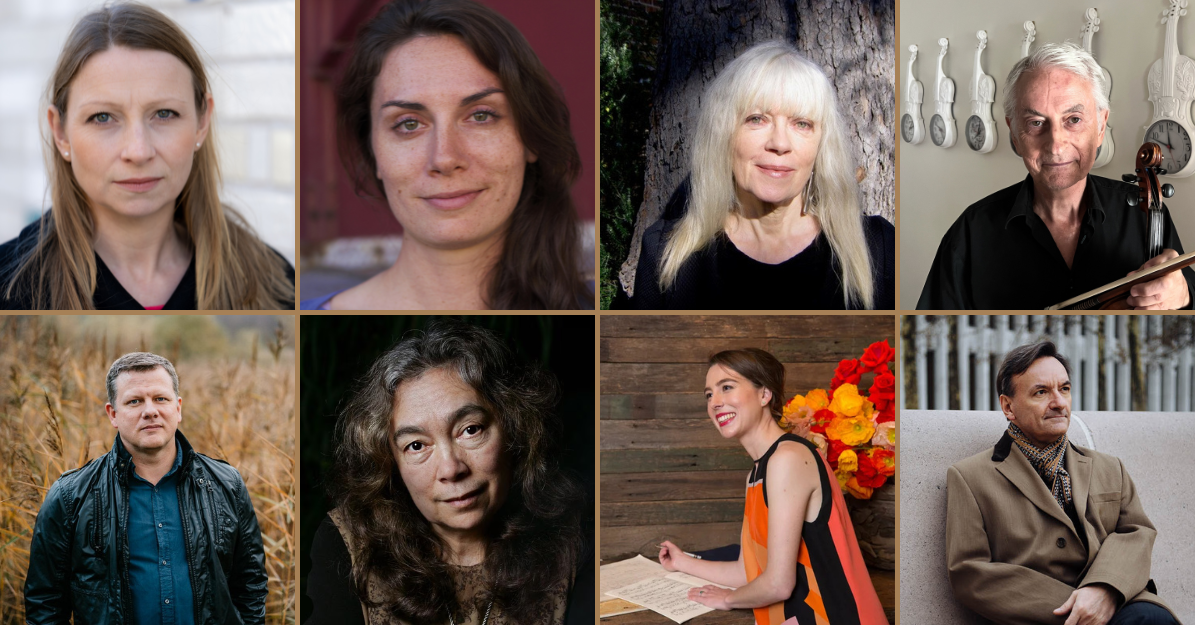
Composers commissioned by Musica Viva Australia to create new work in 2026, clockwise from top left: Charlotte Bray, Melody Eötvös, Hollis Taylor, Jon Rose, Stephen Hough, Aristea Mellos, Alexis Wright, Ēriks Ešenvalds.
The FutureMakers initiative launched in 2015, signalling a new, strategic investment in emerging Australian artists. The first FutureMakers, Arcadia Winds, began a two-year process of artistic development, entrepreneurial training, and industry mentoring. In the decade that followed, FutureMakers would support outstanding talents including Aura Go, Matthias Schack-Arnott, Harry Ward, the Partridge String Quartet, Matt Laing, Katie Yap, Helen Svoboda, and others, artists who are now reshaping the future of Australian music from the concert stage to the classroom and beyond.
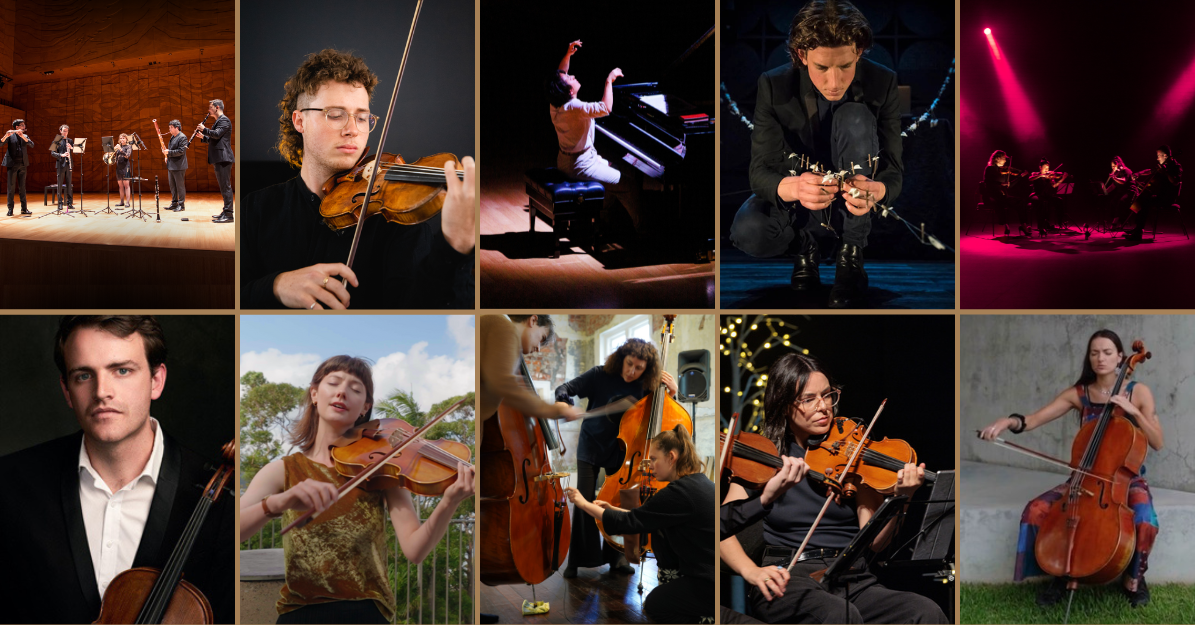
FutureMaker participants clockwise from top left: Arcadia Winds, Harry Ward, Aura Go, Matthias Schack-Arnott, Partridge String Quartet, Freya Schack-Arnott, Madeleine Jevons, Helen Svoboda, Katie Yap, Matt Laing.
In 2020, as Musica Viva marked its 75th anniversary, the global pandemic brought challenges no one could have foreseen. Yet the organisation responded with creativity and resilience, launching Strike A Chord, Australia’s national chamber music competition for school-age musicians. The first Grand Final, won by the Cousin Quartet, was streamed online to audiences across the country, establishing a program that now nurtures young ensembles, provides expert feedback, and fosters the joy of making music together.
By 2025, Musica Viva Australia—now 80 years young—continues to shape the future of chamber music in Australia. FutureMakers alumni perform across the season, Strike A Chord empowers music students nationwide, new works are commissioned every year, and performances reach communities from major city concert halls to the smallest school stages. Eight decades after Richard Goldner’s bold first concert, Musica Viva remains a living testament to the power of music to inspire, connect, and transform.
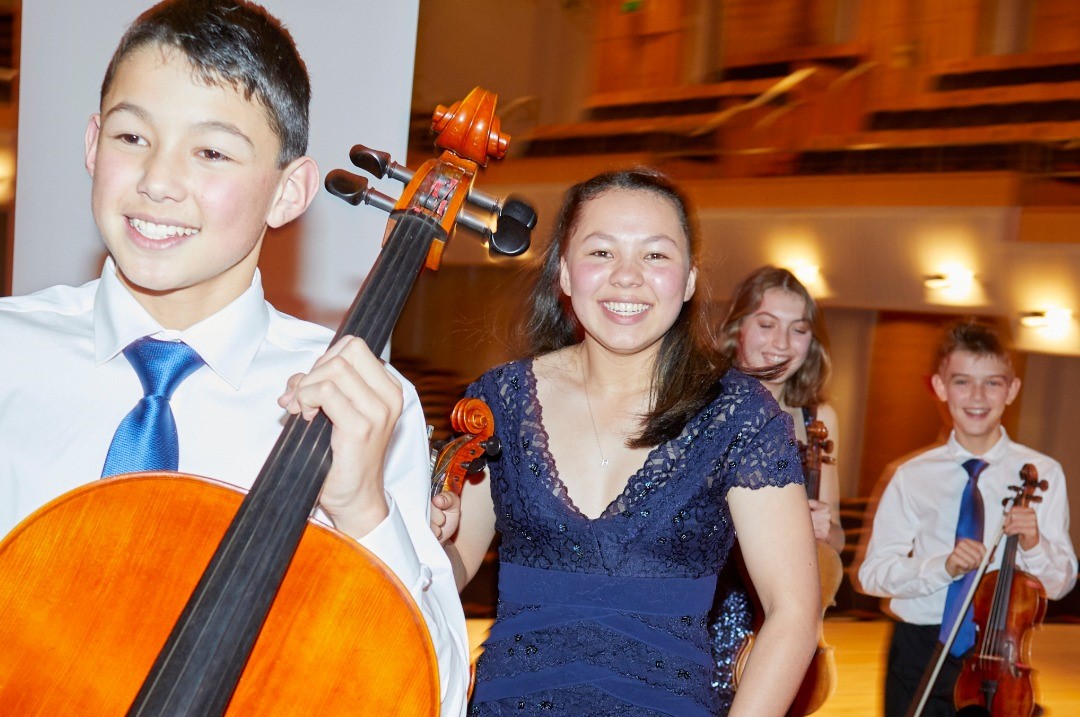
The Cousin Quartet, who won the first Strike A Chord competition in 2020.