The Doric String Quartet is making its fourth visit to Australia, although the ensemble touring this time around is very different from the one that first came in 2007 to compete in the Melbourne International Chamber Music Competition. Since then, the quartet has been through several changes of personnel, and only one member of the original line-up remains.

That would be John Myerscough, cellist – the last man standing.

‘I finally managed to get rid of them all!’ he says with the cackle of a cartoon villain.

The good-natured musician is speaking on the phone during his morning commute to the Royal Academy of Music, where he teaches cello and chamber music. It’s a pleasant 20-minute stroll from his house to the tube at Finsbury Park, and after a miserable London winter, he’s pleased to report the sun is shining.

‘Yesterday it felt like spring has arrived,’ he says. ‘It’s gorgeous, and everyone feels we’ve earned it.’ 
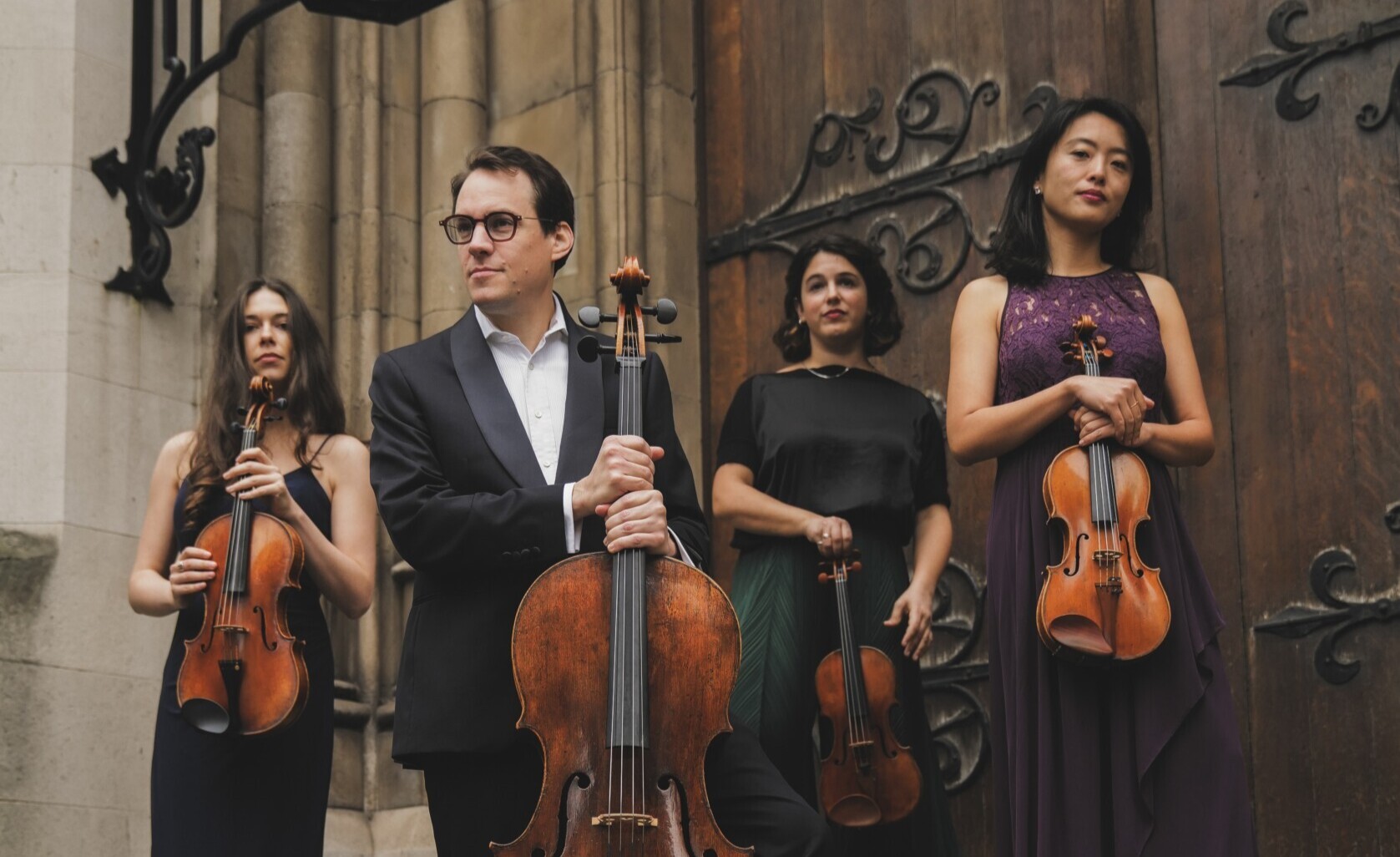
The Doric String Quartet (2026). Credit Kirk Truman.

The Doric String Quartet (2026). Credit Kirk Truman.

The name Doric evokes the symmetry and order of classical architecture. But what’s in a name when the components have all but changed? Joining Myerscough on the current tour are violinists Maia Cabeza and Ying Xue, and Emma Wernig on viola – all of whom are new since the quartet’s last tour for Musica Viva Australia in 2019.

Despite the comings and goings, Myerscough says what’s remained constant across the past three decades of the Doric String Quartet is a spirit of musical inquiry.

‘It’s a common approach to music that is the strongest thing that binds us together – a desire to find deeper meaning in music,’ Myerscough says. ‘In any of the iterations of the quartet, there has always been a common thread – trying to delve deep into the music, to really unpick the score and discover a more sensitive type of expression.

‘I’m the common link, but it’s by no means my group, or my band doing what I want.’ 

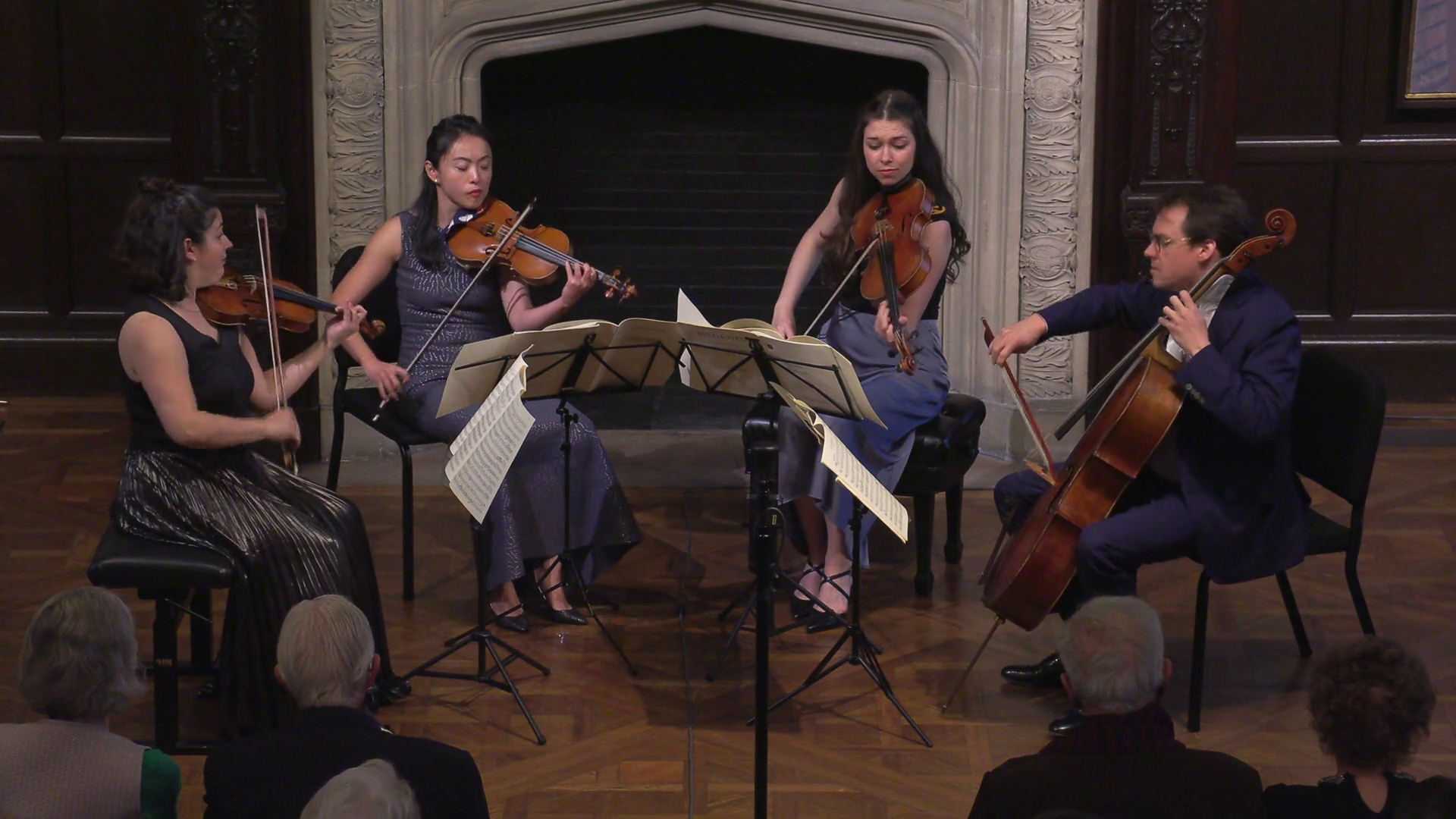
The Doric String Quartet performing at the Phillips Collection in Washington D.C in 2025.

The Doric String Quartet performing at the Phillips Collection in Washington D.C in 2025.

Audiences will have the opportunity to hear evidence of the quartet’s musical investigations in one of the best-known works in the repertoire, Beethoven’s first ‘Razumovsky’ quartet, Op. 59 No. 1. The Doric String Quartet is recording a Beethoven cycle for Chandos and, at the time of writing, their third volume of the cycle is due for release mid-2026.

‘One of the top reasons for being in a string quartet is that you can spend a lifetime engaging with Beethoven’s quartets – it’s the pinnacle of the repertoire,’ Myerscough says.

‘I think we bring a vividness to the characterisation of these pieces – trying to bring out the joy of Beethoven, the lightness and human smile in these works, alongside the seriousness and furrowed brow. It is deeply serious music, but there is variety in them that is not always brought across.’ 


Myerscough was still a teenager when he formed the Doric String Quartet in 1998 with friends he’d met at the Pro Corda school for young chamber musicians in Suffolk. The school is on the grounds of a ruin, Leiston Abbey, just north of Aldeburgh and Benjamin Britten country.

Although the quartet was ‘unceremoniously dumped’ after the first round of the 2007 Melbourne competition, Myerscough says it is the only string quartet from the contest that is still a going concern. The next year, the quartet won the 2008 Osaka International Chamber Music Competition. ‘So we’ve had the last laugh,’ he says. 

‘It’s a common approach to music that is the strongest thing that binds us together – a desire to find deeper meaning in music,’ Myerscough says.

The quartet took its current form in 2024 with the arrival of violinist Maia Cabeza and violist Emma Wernig. Second violin Ying Xue had joined in 2018. For their Australian tour, they are joined by a fifth musician, Lloyd Van’t Hoff, who plays basset clarinet in Thomas Adès’s 2021 piece, Alchymia.

‘When this piece appeared, we thought “We need to get our hands on that”,’ Myerscough says.

‘In Alchymia Adès is playing with old musical forms, with music from London. His harmonic language is something that really speaks to us, and we feel deeply moved by his music. If it moves you, you can do something with it, and hopefully move other people – that’s the main purpose of our business.’

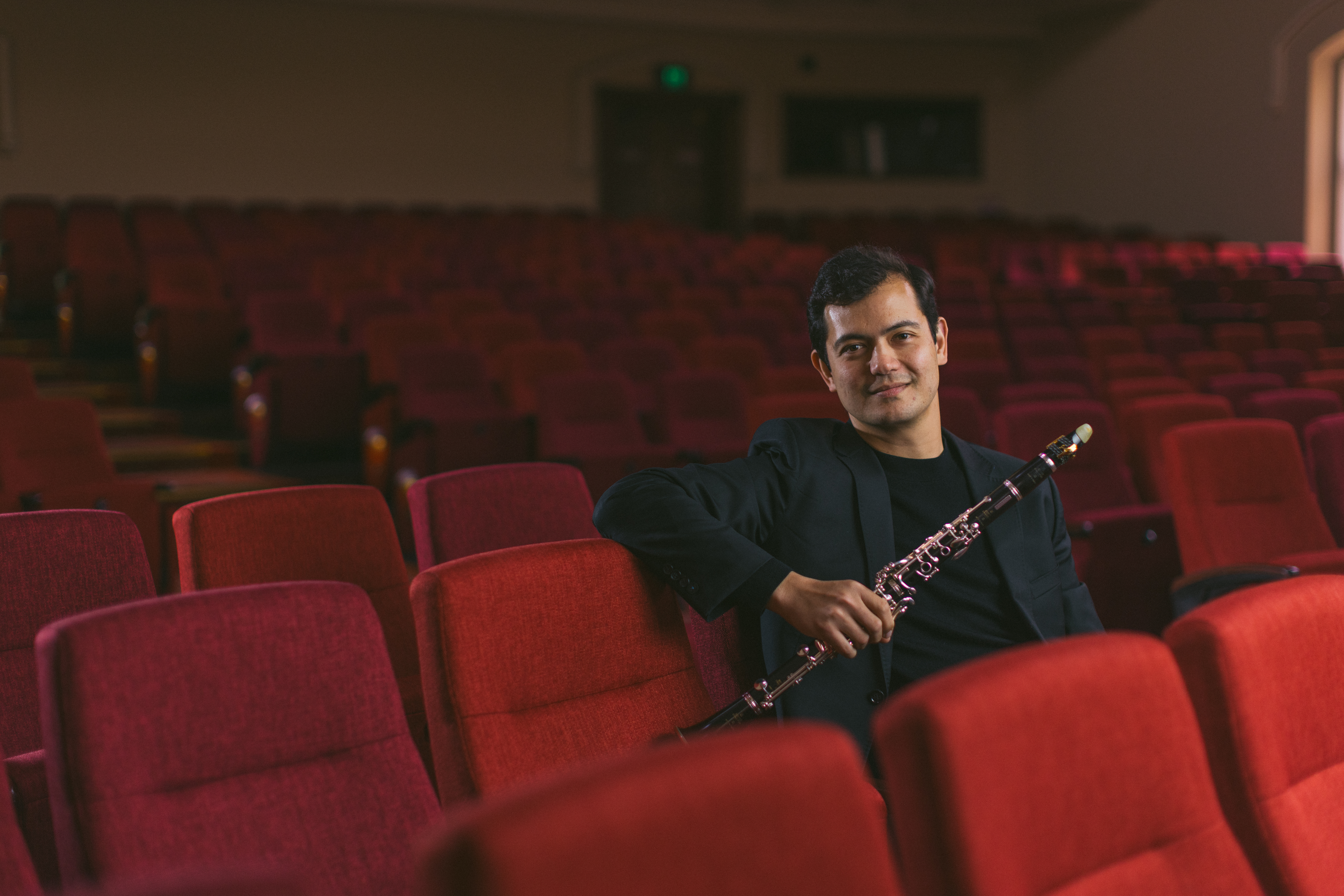
Lloyd Van't Hoff (2025). Credit Mike Smith.

Lloyd Van't Hoff (2025). Credit Mike Smith.

Myerscough detects in Adès’s music a lineage of English composition that he traces back through Britten to Purcell. Opening the concert program is one of Britten’s early pieces, Three Divertimenti for String Quartet.

‘It’s the way that Britten finds space in his music, an openness of texture, and his interest in ancient forms,’ he says. ‘Britten is always looking back to a chaconne or passacaglia – there’s the feeling that you are never far from Purcell.

‘There are few people who write so naturally for these string instruments, and then allow them to become so much bigger than four bits of wood with strings on them.’ 

Myerscough is nearing Finsbury Park station but has time to speak for a few minutes more. He reflects that being in a string quartet is a strange existence between having a full-time job and freelancing. Myerscough and his partner have a toddler, Nancy, whose waking hours and needs often determine his rehearsal timetable.

‘I can move a rehearsal at the last minute, in a way you can’t do if you were in an orchestra,’ he says.

‘It’s a weird existence, between being not at work, and also being very much at work. We just have to be super-organised.’

With that, Myerscough disappears into the station, and another working day begins. 

What would you like to hear about?

This site is protected by reCAPTCHA and the Google Privacy Policy and Terms of Service apply.